
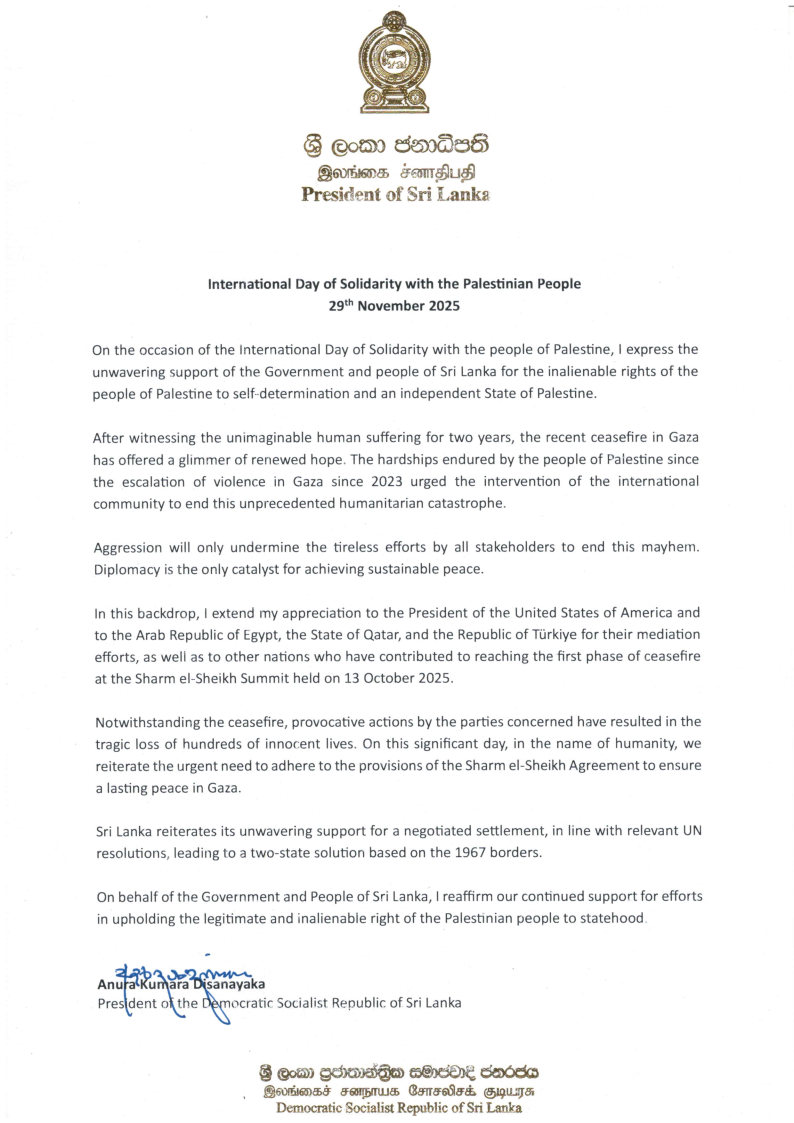
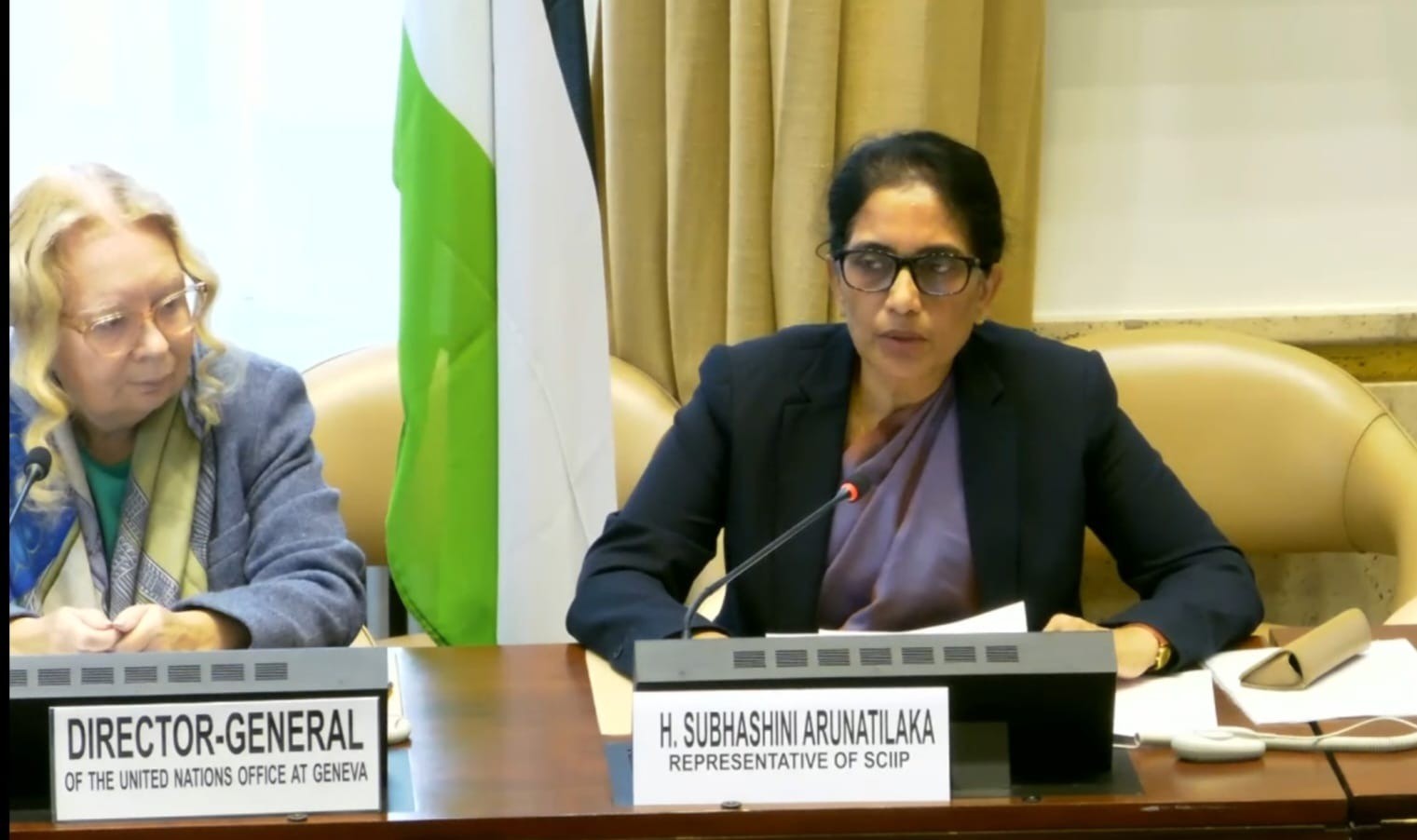
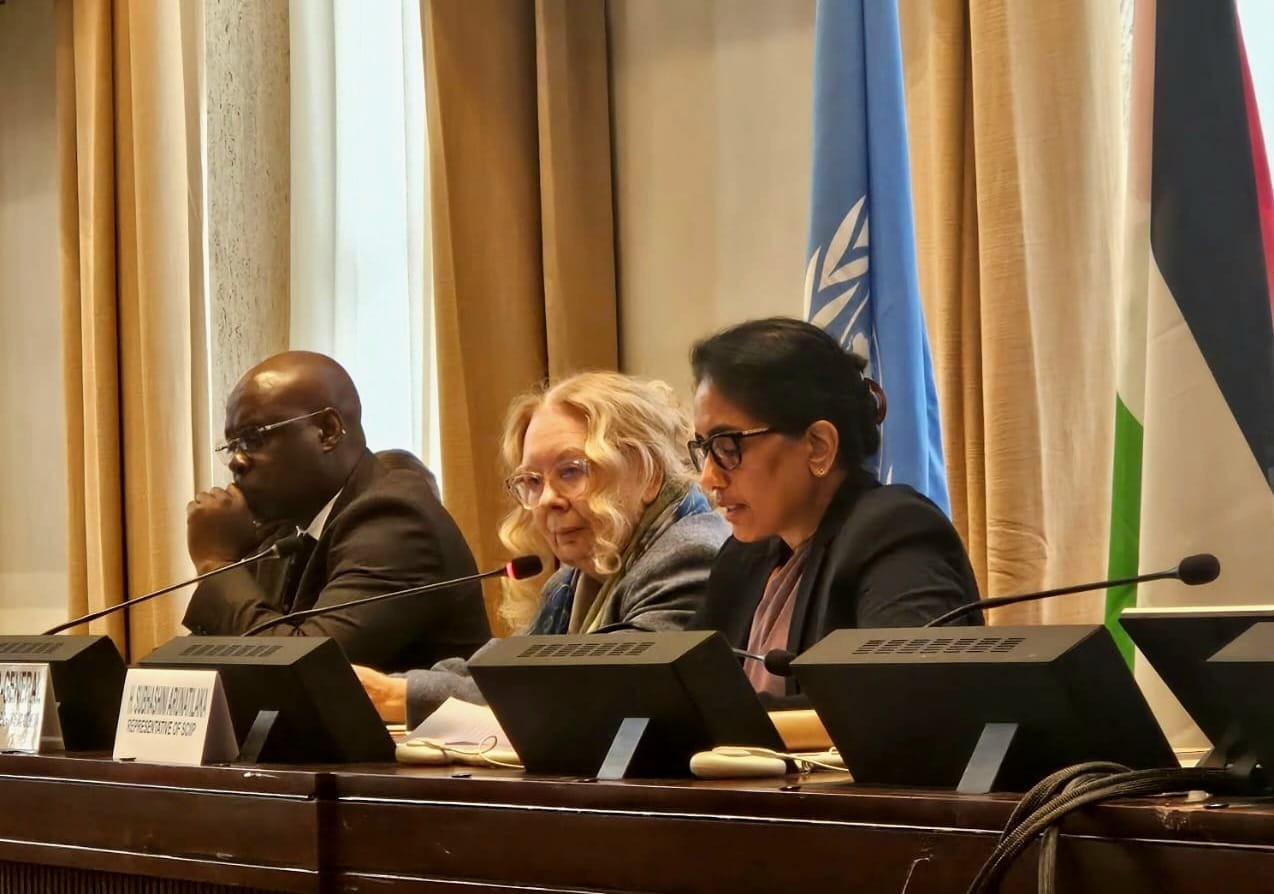
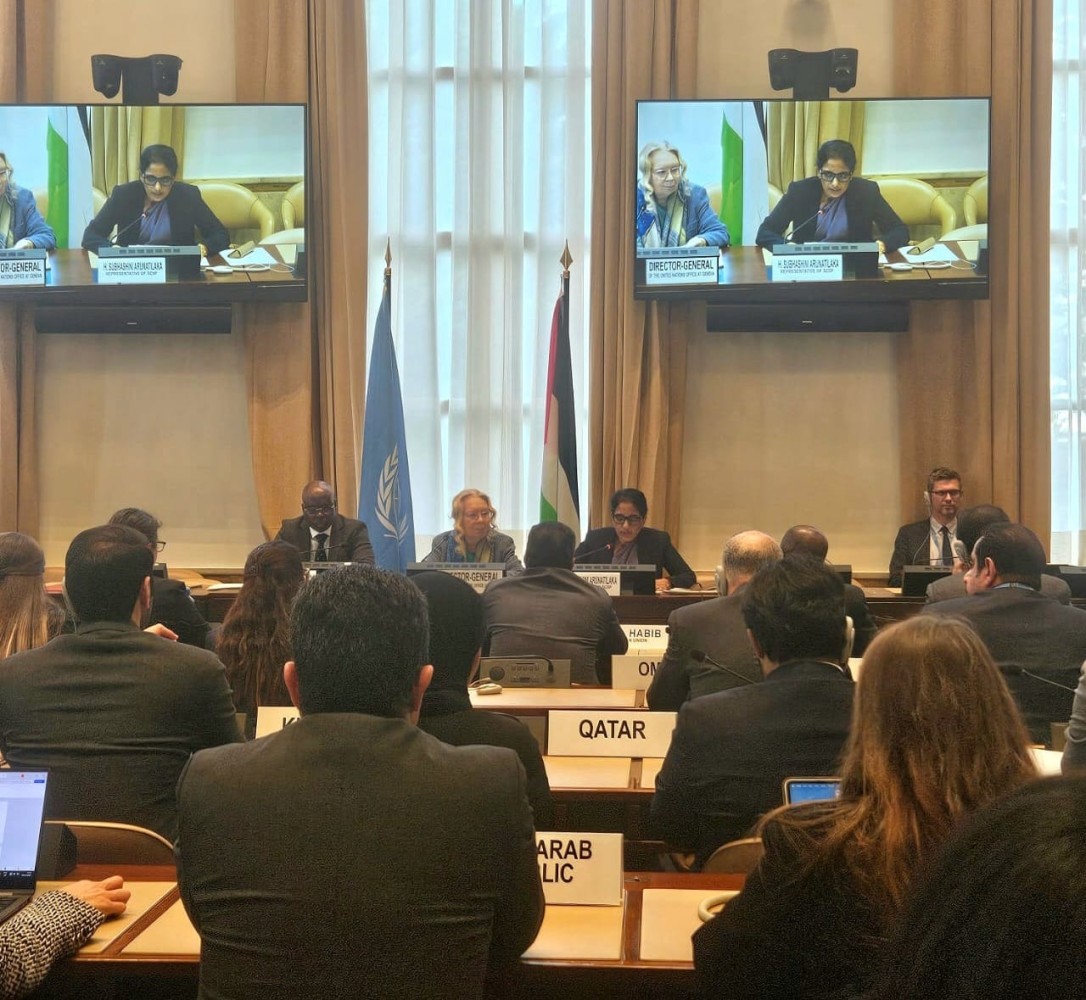
Statement by Her Excellency Himalee Subhashini Arunatilaka, Ambassador and Permanent Representative of Sri Lanka to the UN in Geneva on behalf of the Special Committee to Investigate Israeli Practices Affecting the Human Rights of the Palestinian People and Other Arabs of the Occupied Territories


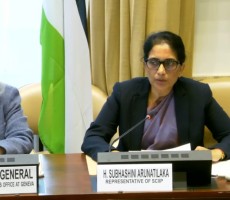
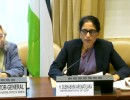
Excellencies, distinguished delegates, ladies and gentlemen,
I have the honour to deliver this statement on behalf of the Chair of the of the Special Committee to Investigate Israeli Practices affecting the Human Rights of the Palestinian People and other Arabs of the Occupied Territories.
“It is an honor to join you on this solemn observance of the International Day of Solidarity with the Palestinian People. The convening of this gathering reminds us of the international community’s enduring responsibility towards people whose inalienable rights remain unfulfilled.
I am also humbled to address this meeting in my capacity as Chair of the Committee mandated by the General Assembly to monitor the human rights situation in the Occupied Palestinian Territory and the occupied Syrian Golan. This role allows me to share reflections informed by the Committee’s observations over the past year.
This Day of Solidarity was declared by the General Assembly in 1977 and was first observed in 1978. For nearly half a century, it has stood as a reminder that the search for peace and justice for the Palestinian people remains unfinished.
In reviewing developments, the Committee has continued to witness conditions that undermine the fundamental rights and protections of Palestinians living under occupation.
The situation in the Gaza Strip remains catastrophic.
Over the past two years, tens of thousands of civilians have been killed, most of them women and children, with thousands more believed to lie beneath destroyed neighborhoods. Entire communities have been reduced to rubble. Homes, hospitals, schools and essential infrastructure have been damaged or destroyed, leaving most of the population displaced and many areas uninhabitable.
Large sections of the territory have been declared unsafe or inaccessible. Even areas identified as safe zones have come under fire. By the middle of 2025, more than four-fifths of Gaza had been placed under evacuation orders or declared no-go areas, leaving civilians with no reliable refuge.
These conditions persist despite binding provisional measures, as clarified by the International Court of Justice in its recent advisory opinions, and despite repeated calls for compliance with international humanitarian and human rights law. Humanitarian access remains restricted, and humanitarian and United Nations staff have been killed at levels without precedent in the history of this Organization.
The situation in the occupied West Bank, including East Jerusalem, has sharply deteriorated. The Committee has documented unprecedented levels of settler violence, often occurring in the presence of, or with the acquiescence of security forces. Palestinians have endured killings, injuries, mass arrests and widespread property destruction.
Settlement expansion continues at a record pace. Of particular concern is the resumption of land registration in Area C after more than five decades. This step is expected to lead to widespread dispossession and deeper settlement entrenchment. These developments amount to de facto annexation and stand in clear violation of international law and relevant Security Council resolutions.
Across the territories under occupation, we observe an overarching pattern.
Territorial control is being consolidated through settlement expansion, land appropriation, military activity and the erosion of protections afforded to civilians. The ideological framework - Land of Israel - has been used to justify settlement growth, annexation initiatives and the continued presence of military forces in parts of Gaza.
In light of these developments, several principles must guide the international community. Civilians must be protected under international humanitarian and human rights law. Annexation, whether formal or incremental, is unlawful. Humanitarian access must be unrestricted, and humanitarian and United Nations personnel must be protected. The mandate and operations of UNRWA must be preserved, for the Agency remains essential to the dignity and survival of millions of Palestine refugees.
On this Day of Solidarity, expressions of commitment must translate into meaningful action. Member States must uphold international law, protect civilians and support accountability mechanisms, including those tasked with investigating and addressing violations.
While a ceasefire is essential – and widely welcomed as a moment of relief - it cannot substitute the full implementation of legal obligations, including the need to bring an end to occupation. A just and lasting peace requires the realization of the inalienable rights of the Palestinian people, including their right to self-determination.
Let this Day remind us that solidarity is a commitment to justice, human dignity, and to the rule of law. The only prospect to express our solidarity with the Palestinian people is to recognize the legitimate and inalienable right of the Palestinian people to statehood as per the comprehensively negotiated political settlement based on the 1967 borders.
I thank you."


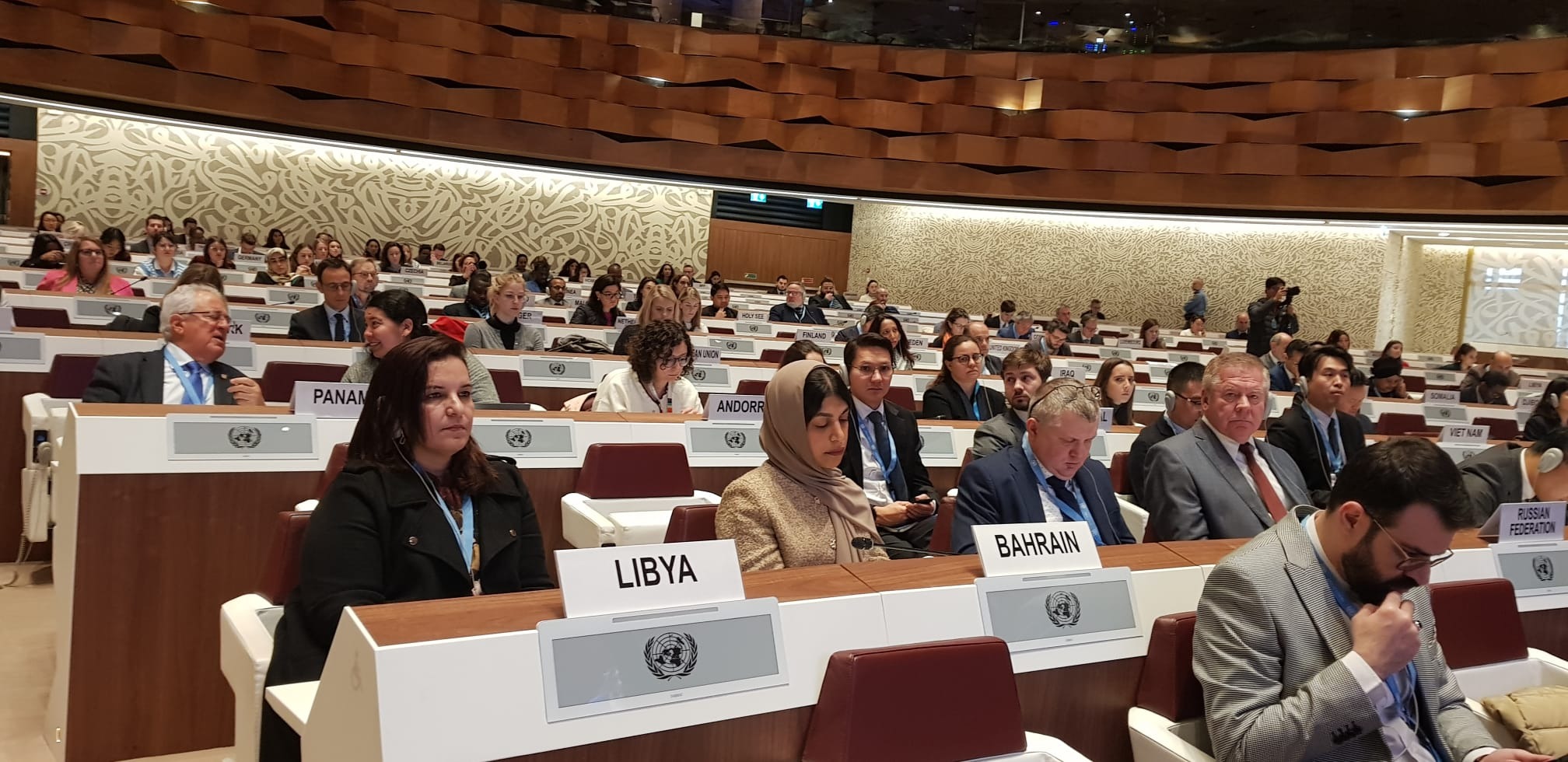
Statement delivered by Her Excellency Himalee Arunatilaka, Ambassador and Permanent Representative of Sri Lanka to the United Nations in Geneva on behalf of the Chair of the Special Committee to Investigate Israeli practices affecting the Human Rights of the Palestinian People and other Arabs of the Occupied Territories
Mr. President,
On the solemn occasion of the International Day of Solidarity with the Palestinian People, I thank you for the opportunity to deliver this statement in my capacity as the Chair of the Special Committee to Investigate Israeli practices affecting the Human Rights of the Palestinian people and other Arabs of the occupied territories.
34th Conference of the ICRC: ´Navigate Uncertainty, Strengthen Humanity’
28 to 31 October 2024, Geneva
‘For the Record: Voices from the Conference’
Statement by Sri Lanka


Madam Chair
Sri Lanka conveys its deep and profound appreciation to the ICRC, the IFRC and the National Societies for their leading role across the world in forming the largest humanitarian network.
This Conference coincides with the 75th Anniversary of the Geneva Conventions, that codified the fundamental principles of IHL. In line with Sri Lanka's commitment to these principles the National IHL Committee with the technical assistance from the ICRC has translated the Geneva Conventions into the vernacular languages, Sinhala and Tamil.
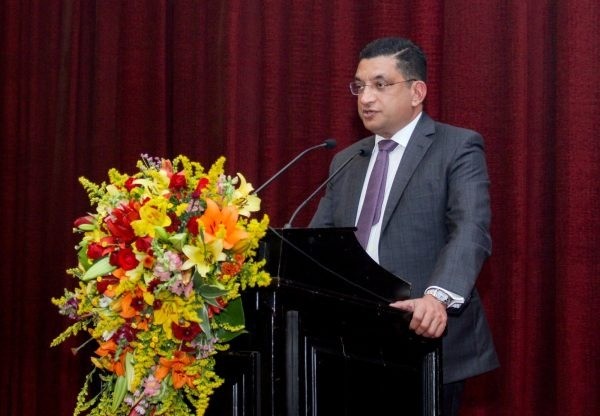
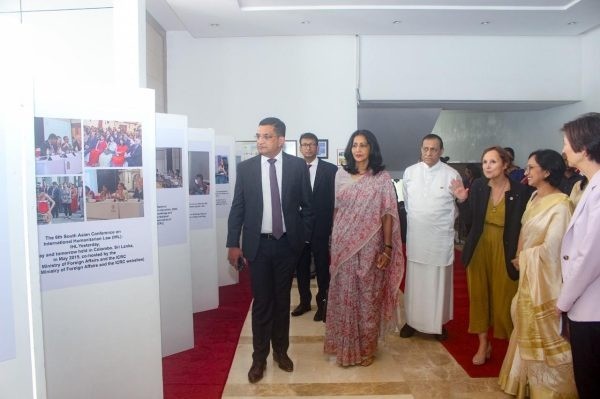
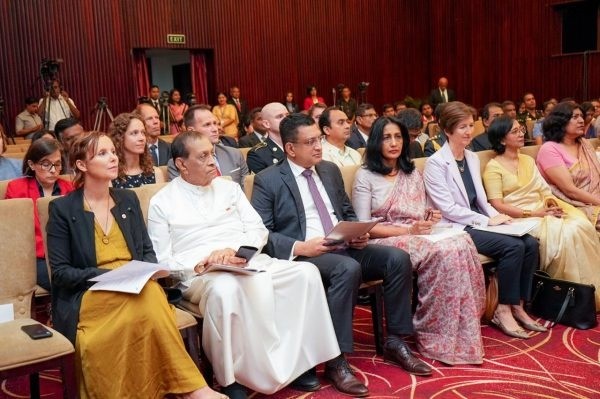
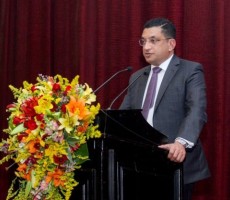
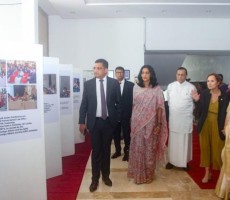


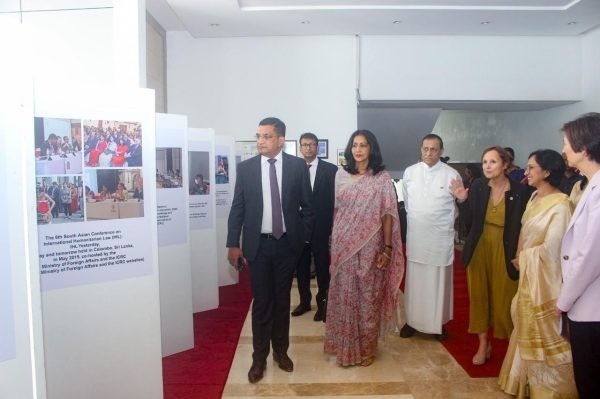
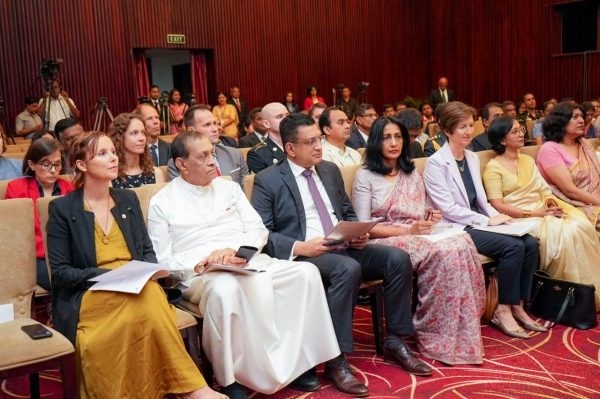
The Ministry of Foreign Affairs, Sri Lanka, the Embassy of Switzerland to Sri Lanka and the Maldives and the International Committee of the Red Cross (ICRC) commemorated the 75th Anniversary of the Geneva Conventions in an event themed “75 years of the Geneva Conventions: Global and Sri Lankan Perspectives” on 14 August 2024 at the BMICH in Colombo.

Statement by Sri Lanka at the General Debate of the 71st Annual Session of the Executive Committee (ExCom) of the United Nations High Commissioner for Refugees (UNHCR) programme
Mr. Chairperson,
High Commissioner Mr. Filippo Grandi,
Excellencies, Distinguished delegates,
Sri Lanka takes this opportunity to congratulate you and the Bureau for the excellent manner in which you have steered the work of the Executive Committee since assumption of Office in 2019.
We appreciate the presentation by the High Commissioner and his important remarks on the on how the Global Compact on Refugees has enabled the response to both new and protracted refugee crises, as well as to the COVID-19 emergency. We value his efforts and those of his dedicated staff for their continuous efforts to assist and improve the well-being of over 79.5 million displaced persons worldwide with a view to ensuring sustainable solutions for their concerns. Unfortunately, as per the global trends, the numbers keep on rising, while possibilities for durable solutions become complicated by the day.

Speaking at the General Debate of the 70th session of the Executive Committee of the United Nations High Commissioner for Refugees (UNHCR), Ambassador A.L.A. Azeez, Permanent Representative of Sri Lanka, outlined measures taken by Sri Lanka to address the issue of statelessness. The meeting, chaired by Ambassador Boudjemâa Delmi of Algeria, takes place from 7-11 October 2019, with the participation of Mr. Filippo Grandi, the UN High Commissioner for Refugees.

Full Statement by Ambassador Azeez
Permanent Mission of Sri Lanka
Geneva
09th October 2019